Journal · Materials
Underfloor heating: what will lie flat and what will move
Parquet, porcelain, adhesive and the first heating cycle. Where the manufacturer says in so many words that the guarantee is void.
Underfloor heating dries out everything laid on top of it. Porcelain doesn’t care; wood does. Half the parquet complaints in Spain come from flats with underfloor heating, and nearly all of them start with “we turned it on in November, straight to maximum”.
How the finishes behave
The limit is nearly always the same: the floor surface must not go above 27 °C. Everything else is detail.
- 01 Porcelain The perfect match: it doesn’t expand, it conducts heat well and the thickness is no obstacle. The only requirement is a flexible C2S1 adhesive.
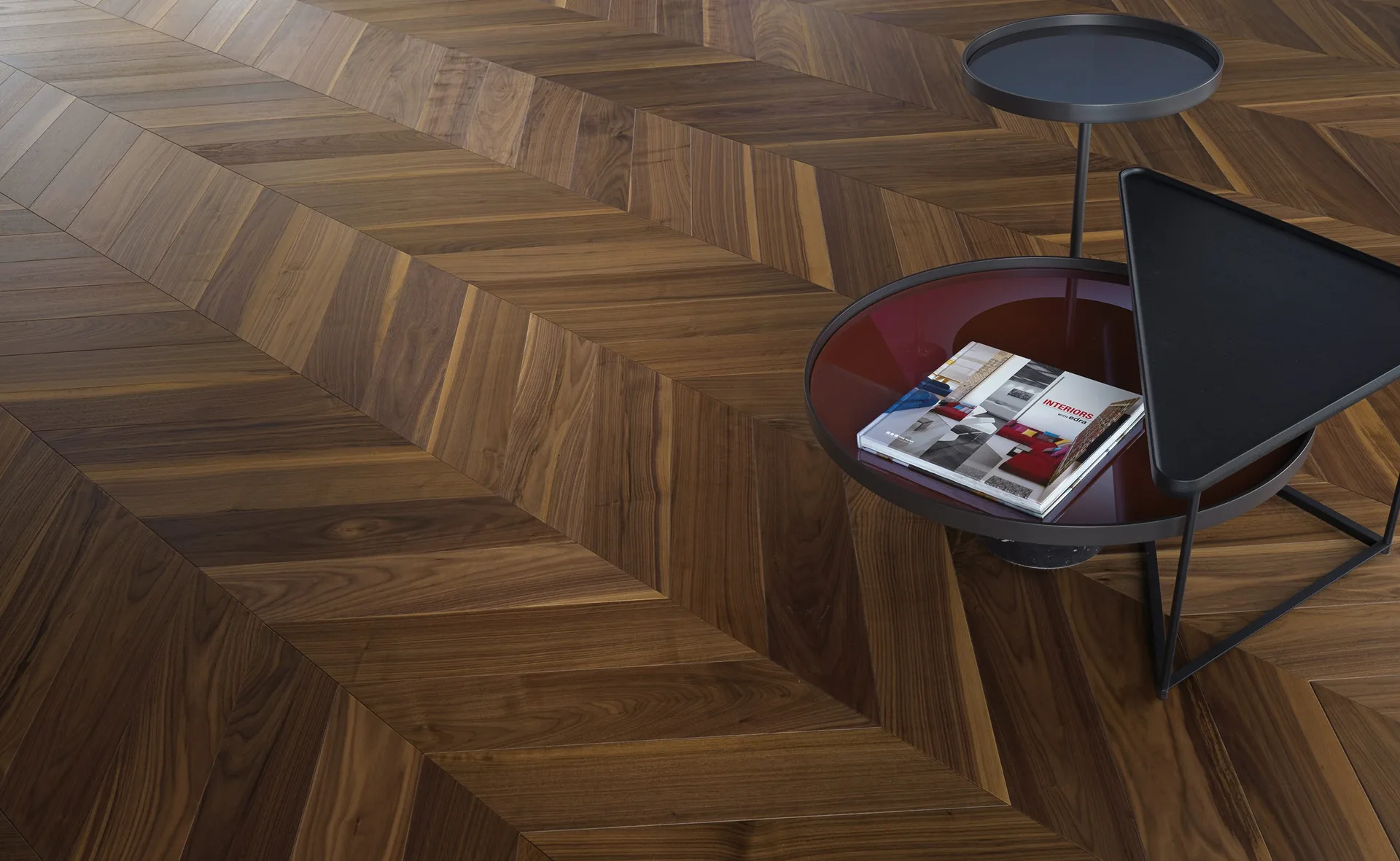
- 02 Engineered board It works with a wear layer up to 4 mm and only when glued down. Floating installation over underlay does not go with underfloor heating.
- 03 Solid board Manufacturers either forbid it outright or withdraw the guarantee. Solid wood moves: gaps in winter, cupping in spring.
- 04 Vinyl and SPC They take underfloor heating but not overheating: above 27 °C the joints open up, and that cannot be repaired.
The first heating cycle decides everything
The screed is dried for at least 21 days, then the circuit is started to a protocol: plus 5 °C a day up to working temperature, three days holding, minus 5 °C a day back to zero. Only then does the floor finish go down. Skipping the procedure means handing all the residual moisture in the screed over to the wood.
What breaks wood over underfloor heating is not the temperature but the jump in it. Guarantees are lost not to 27 degrees but to five degrees in an hour.
What can go over underfloor heating
| Floor finish | Underfloor heating | Installation | Limit |
|---|---|---|---|
| Porcelain | Underfloor heatingyes | InstallationC2S1 adhesive | Limitnone |
| Engineered board | Underfloor heatingyes | Installationglued down only | Limitwear layer 4 mm |
| Solid wood | Underfloor heatingno | Installation— | Limitguarantee withdrawn |
| Vinyl, SPC | Underfloor heatingyes | Installationglued or click | Limit27 °C |
About humidity in winter
The heating season drops the humidity in a flat to 25–30%, while wood wants 45–60%. Gaps between the boards in January are not bad workmanship but a normal response to dry air; by May they close up again. If the gaps annoy you, put in a humidifier: cheaper than relaying the floor.
We supply the heating protocol and the adhesive requirements along with the delivery note. Give them to the fitter before the work starts, not after.




We’ll check your floor build-up
Book a visit