Journal · Interiors
A terrace by the sea: what survives the salt
Teak, powder-coated aluminium and sun-resistant fabrics. How many seasons it takes for each of them to fade.
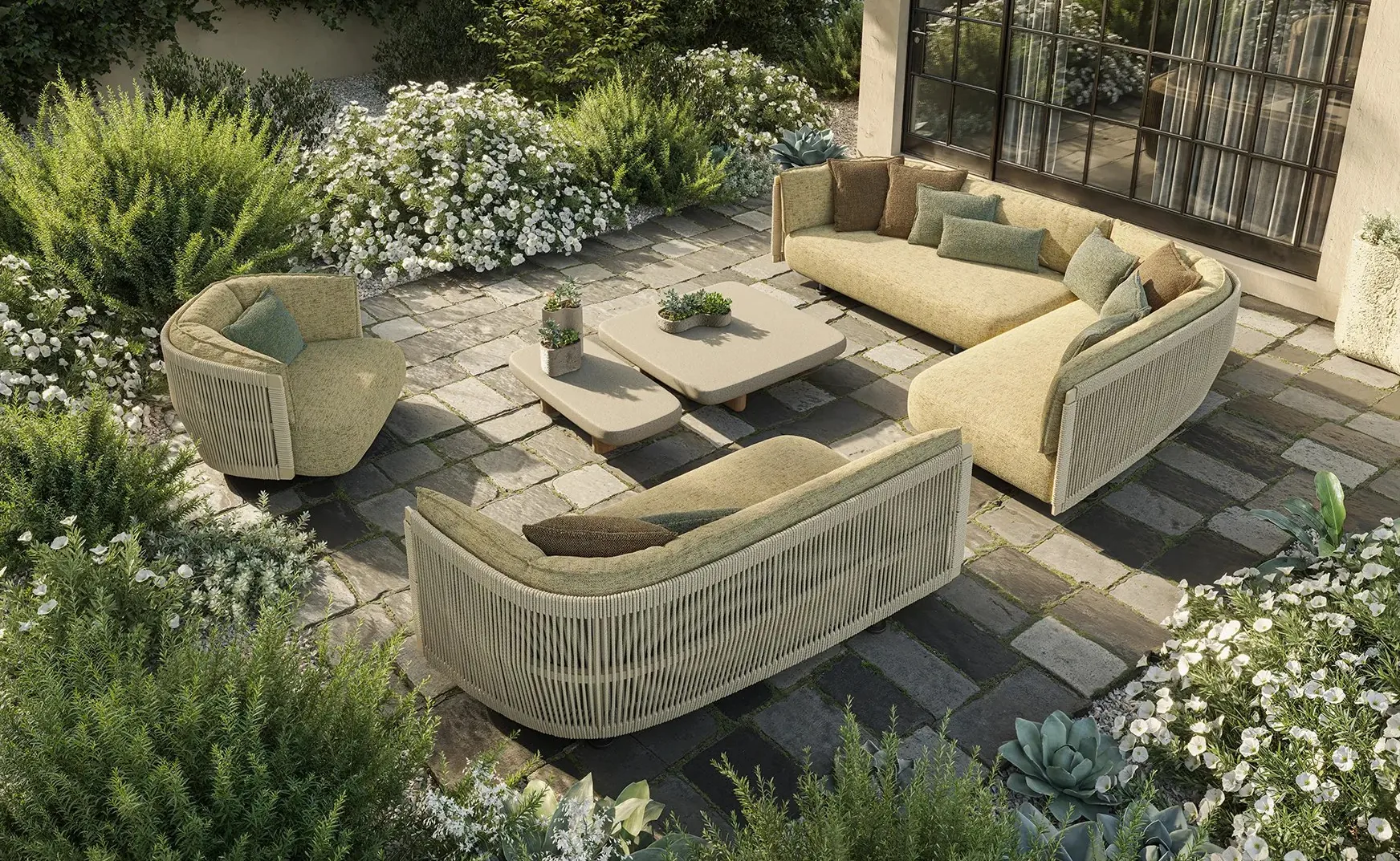
A terrace in Castelldefels, forty metres from the water. After two seasons the owners changed the cushions, washed down the aluminium and left the teak alone — it had turned silver, and that turned out to be the best thing that could have happened to it.
Three enemies and what they do
They work together but break different things, and each has to be guarded against separately.
- 01 Salt It settles as a film and eats into anything containing iron: screws, hinges, lounger mechanisms. A4 stainless holds up; A2 is covered in rust spots within two years.
- 02 Ultraviolet It burns the pigment out of fabrics and plastics. Ordinary outdoor fabric loses its colour in a season; solution-dyed fibre holds for five to seven years.
- 03 Wind It doesn’t damage materials itself, but it carries sand. Sand works like sandpaper: it takes matt powder coatings off faster than salt does.
- 04 Damp Night dew near the water doesn’t dry until midday. Cushions without quick-drying filling pick up a smell within a season.
What to choose, material by material
Teak and iroko need no upkeep at all: they go grey and last twenty years. If you want to keep the honey colour, that means oil twice a year, forever. Buy aluminium only powder-coated and only with A4 fixings. Weave should be synthetic, in solution-dyed fibre; natural rattan does not survive by the sea.
By the sea, wood doesn’t rot — it goes grey. What rots is whatever it was screwed together with.
What holds up and what doesn’t
| Material | Salt | Sun | After 5 years |
|---|---|---|---|
| Teak | Saltholds up | Sungoes grey | After 5 yearsas new |
| Aluminium | Saltholds up | Sunholds up | After 5 yearssand scratches |
| Woven fibre | Saltholds up | Sunholds up | After 5 yearsslightly lighter |
| Solution-dyed fabric | Saltholds up | Sunholds up | After 5 yearsa shade lighter |
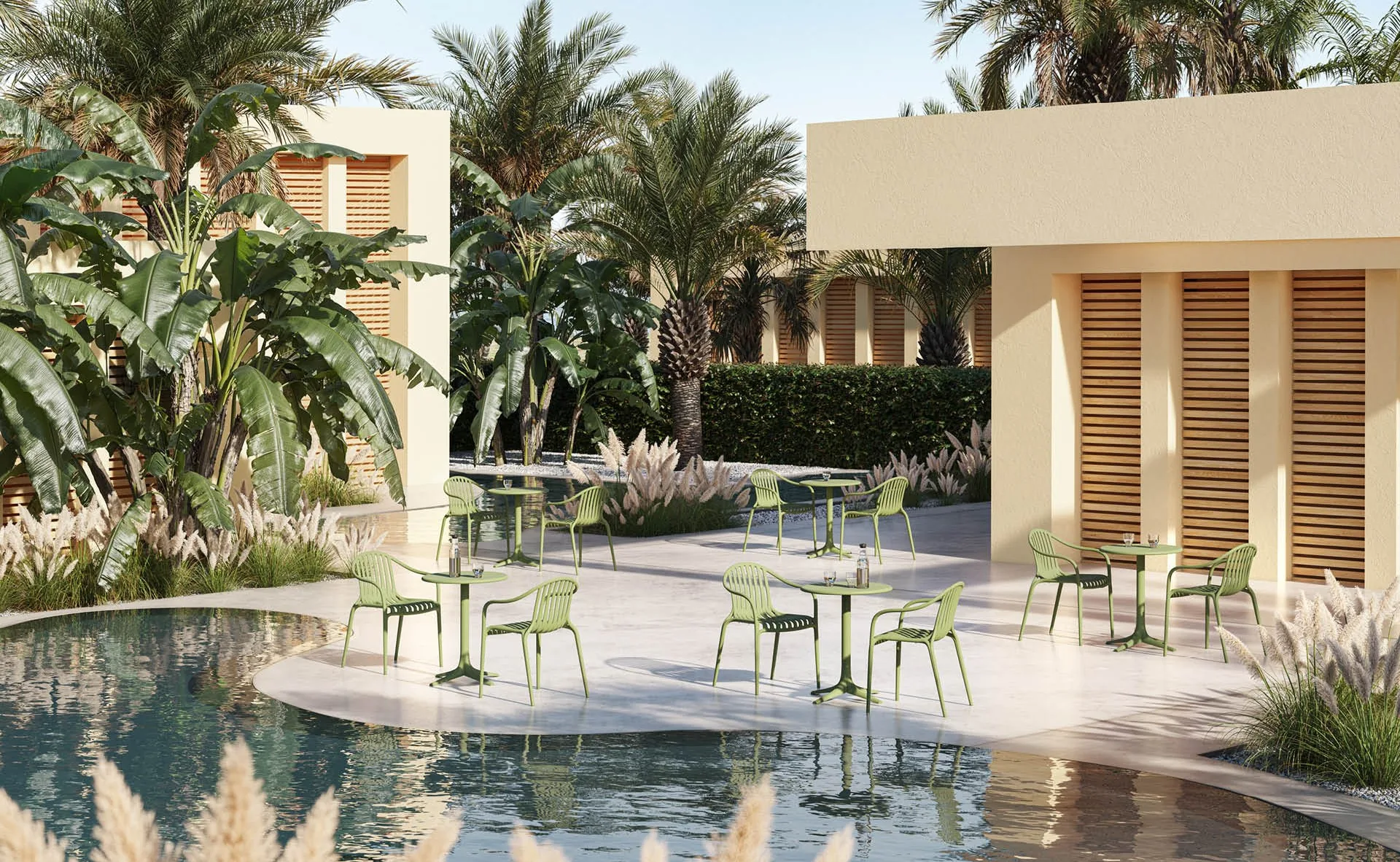
Porcelain outdoors
For a terrace you use a 20 mm slab with an R11 anti-slip surface. It is laid on adjustable pedestals without adhesive: a ventilation gap stays under the slab, water drains away, and any slab can be lifted and replaced in ten minutes. It costs more than laying on adhesive, but by the sea it pays for itself with the first repair.
Light tones are more practical here than dark ones: black porcelain on a south-facing terrace gets so hot by three in the afternoon that you cannot walk on it barefoot.




We’ll build the terrace for your own wind
Book a visit